Table Of Content
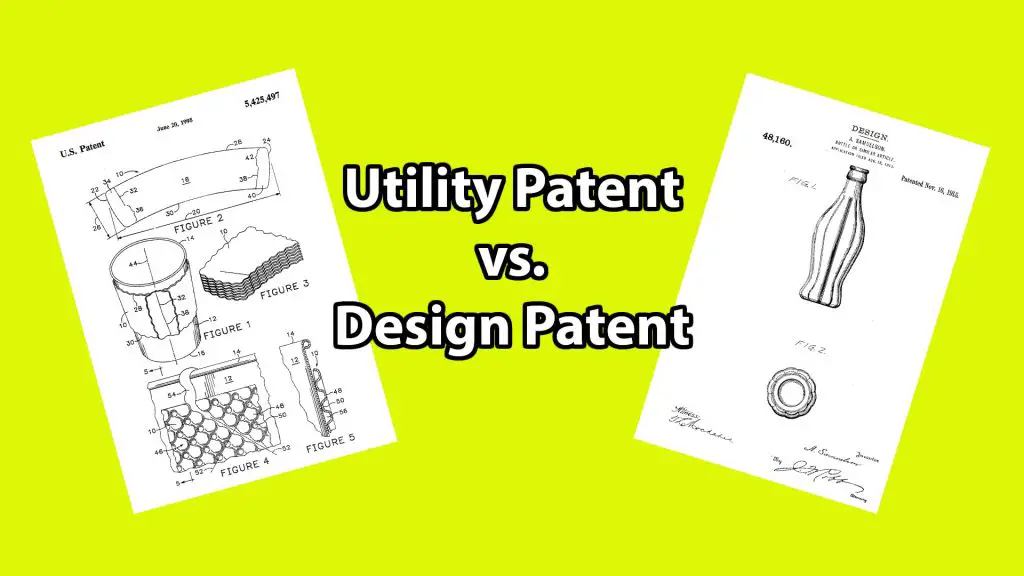
Design patents have gained importance in recent times, so it’s worth spending the extra money to protect the unique appearance of your invention. All in all, design patents tend to be stronger as part of a combined portfolio with utility patents. But if you wish to have some initial IP protection and have the ability to place that coveted “patented” mark on your products, as an initial step when bringing a product to market, applying for a design patent may be a great option. For example, a patentability search is often a recommended first step in the patent application process that can uncover potential prior art patent references that may impact the patentability of your invention. An experienced patent attorney can assist with the patentability search and advise you on the results thereof. New or improved products, processes, or machines are eligible for utility patents, which give the patent holder exclusive rights over the product.
Design Patents vs. Utility Patents: What You Need to Know About Differences
A utility patent is the type of patent most people are familiar with—it’s the patent you get when you invent a device that does something new or performs an old task in a new way. A utility patent protects the functional aspects of your device, such as the way it operates or is used. The difference between a utility patent vs design patent comes down to the separation of form and function. Broadly speaking, a utility patent covers what a device does or how it does it, while a design patent protects the appearance of a device. Obtaining a design patent involves a similar process to getting a utility patent. You must first conduct a patent search to ensure that your design is unique and does not infringe on any existing patents.
Claim or claims
A side-by-side comparison is made of the design patent drawings with the accused product for design patent infringement. This comparison is made to determine if the two designs would look substantially similar to an objective observer. The resemblance should be enough to deceive the observer into purchasing one product, supposing it to be the other. For utility patent infringement, one looks to the patent claims to determine if all limitations within the claims are found in the accused product. While a utility patent protects function, a design patent protects appearance. There can be some blurring of that line and design patents have been awarded for devices that appear, for all practical purposes, to be functional.

Benefits of Design Patents
Whereas the claim in a design application is primarily visual and more limited in scope, the claims in a utility application are textual and generally broader in scope. Broader claims have a higher probability of being rejected over prior art that discloses the claimed subject matter. As shown above, the cost of a design patent is fraction of the cost of a utility patent application which can easily get into the tens of thousands from start to finish. In most cases, it will cost roughly $2,000 to $4,000 to obtain a design patent.
The Rise of Design Patents: Insights from the Apple v. Samsung Battle - JD Supra
The Rise of Design Patents: Insights from the Apple v. Samsung Battle.
Posted: Wed, 05 Dec 2018 08:00:00 GMT [source]
Accelerate development with integrated design control and risk software. This requirement is entirely subjective and is the most ambiguous to determine. An attorney with over 20 years of experience working in a variety of law firm and in-house positions, Tim Peterson sp... Join over 10,000 others who have asked us to help protect their best ideas and inventions.
Cross-reference to related applications
That is, if the postcard receipt has been annotated to indicate that a particular paper was not received, the postcard receipt will not serve as evidence of receipt of that paper in the USPTO. Likewise, the postcard receipt will not serve as evidence of receipt of papers that are not adequately itemized. The title of the invention (or an introductory portion stating the name, citizenship, residence of each applicant, and the title of the invention) should appear as the heading on the first page of the specification. Although a title may have up to 500 characters, the title must be as short and specific as possible. Before sharing sensitive information, make sure you’re on a federal government site.
Duration of Protection
Industry Patent Watch: The rise of design patents - Bicycle Retailer
Industry Patent Watch: The rise of design patents.
Posted: Thu, 15 Sep 2022 07:00:00 GMT [source]
The application must include drawings or photographs that fully represent the appearance of the product. Unlike utility patents, which require in-depth technical explications, a design patent application typically does not necessitate detailed descriptions of the functional aspects. Instead, the focus is squarely on the depiction of ornamental design characteristics. You can electronically submit the required filing, search, and examination fees using a credit card or electronic funds transfer. You will also owe the additional fee set forth in 37 CFR § 1.16(u) referenced above for not filing the specification, claims, and abstract in DOCX format if your nonprovisional utility application is filed on or after January 17, 2024.
Bold Patents Can Guide You on Your Patent Application
With two primary types at our disposal – utility patents and design patents – it’s essential to distinguish their unique characteristics and the varying protections they offer. This article will act as a compass, guiding you through the differences between these two patent categories, thereby ensuring you make informed decisions to protect your innovative endeavors. By comprehending these distinctions, you will be better equipped to shield your inventions and design aesthetics from any potential infringement.
Medical Device Clinical Trials: Regulatory Pathways & Study Types Explained
However, if your invention’s visual appearance is its most significant selling point, a design patent may be more suitable. A design patent starts with the letter D, while utility patents have numbers and no letters. You can apply for a design patent any time you change a product's look or style without changing its utility. If the Walt Disney Company wanted to make a Mickey Mouse toaster, they could get a design patent for this product. They couldn't get a utility patent because their product still toasts bread like any other toaster.
If you want to protect the functional features of your concept, then apply for a utility patent. In some cases, it may be appropriate to file both design and utility patent applications. Additionally, as noted above, utility and design patents have different durations of protection—20 years from the filing date for a utility patent and 15 years for a design patent. The application process for the two types also varies, with utility patents generally being more complex and costly due to their extensive requirement for details and claims. So, if you’re in a situation where your invention not only has a unique function, but also a unique appearance, you should consider filing both a utility patent application and a design patent application. We do not recommend that you file both applications on your own, it’s a somewhat complicated situation that requires the help of an experienced patent attorney.
Identifying indicia, if provided, should include the title of the invention, the inventor's name, the application number (if known), and docket number (if any). This information must be placed within the top margin of each sheet of drawings. The name and telephone number of a person to call if the USPTO is unable to match the drawings to the proper application may also be provided in the event the drawings are filed in paper, rather than via Patent Center.


No comments:
Post a Comment